Software development is often discussed as if it were a standardized discipline – a predictable process that simply scales with company size. In reality, the difference between startup software development and enterprise software development is fundamental, structural, and strategic.
A venture-backed startup building its first product operates in a completely different reality than a global enterprise modernizing mission-critical infrastructure. The contrast is not just about budget or team size. It is about risk tolerance, decision velocity, operational responsibility, compliance exposure, architectural depth, and long-term accountability.
Understanding the differences between startup vs enterprise software development is not theoretical. It directly affects:
- How much you need to invest
- How much risk your organization absorbs
- How quickly you can launch
- How your teams are structured
- How scalable your technology becomes
- How predictable your delivery outcomes are
When technology aligns with business maturity, it becomes a competitive advantage. When it does not, it becomes friction.
Let’s examine both models in depth.
Startup Software Development: Building for Speed, Learning, and Market Validation
Startup software development exists in an environment defined by urgency and uncertainty. Early-stage companies are not optimizing for institutional stability – they are optimizing for survival, traction, and momentum.
At this stage, the company may not yet have confirmed product-market fit. The roadmap may evolve monthly. Funding often depends on hitting measurable growth milestones within a limited runway. Investor expectations shape priorities. Competitive pressure forces rapid iteration.
Under these conditions, software becomes an instrument of discovery. The primary objective is not architectural perfection. It is validation.
Startup teams are asking:
- Does this product solve a real problem?
- Will users adopt and pay for it?
- Can we release fast enough to stay competitive?
- Can we adapt before capital runs out?
This shapes the entire development philosophy. Startup software development emphasizes short feedback loops, minimal viable features, and fast deployment cycles. Instead of spending months planning a comprehensive system, teams launch core functionality quickly and refine it based on real-world usage data.
This does not mean startups ignore quality. Rather, quality is contextual. A startup system must be reliable enough to support growth – but it does not need to support millions of users on day one. Overengineering too early can drain financial resources before the product proves itself.
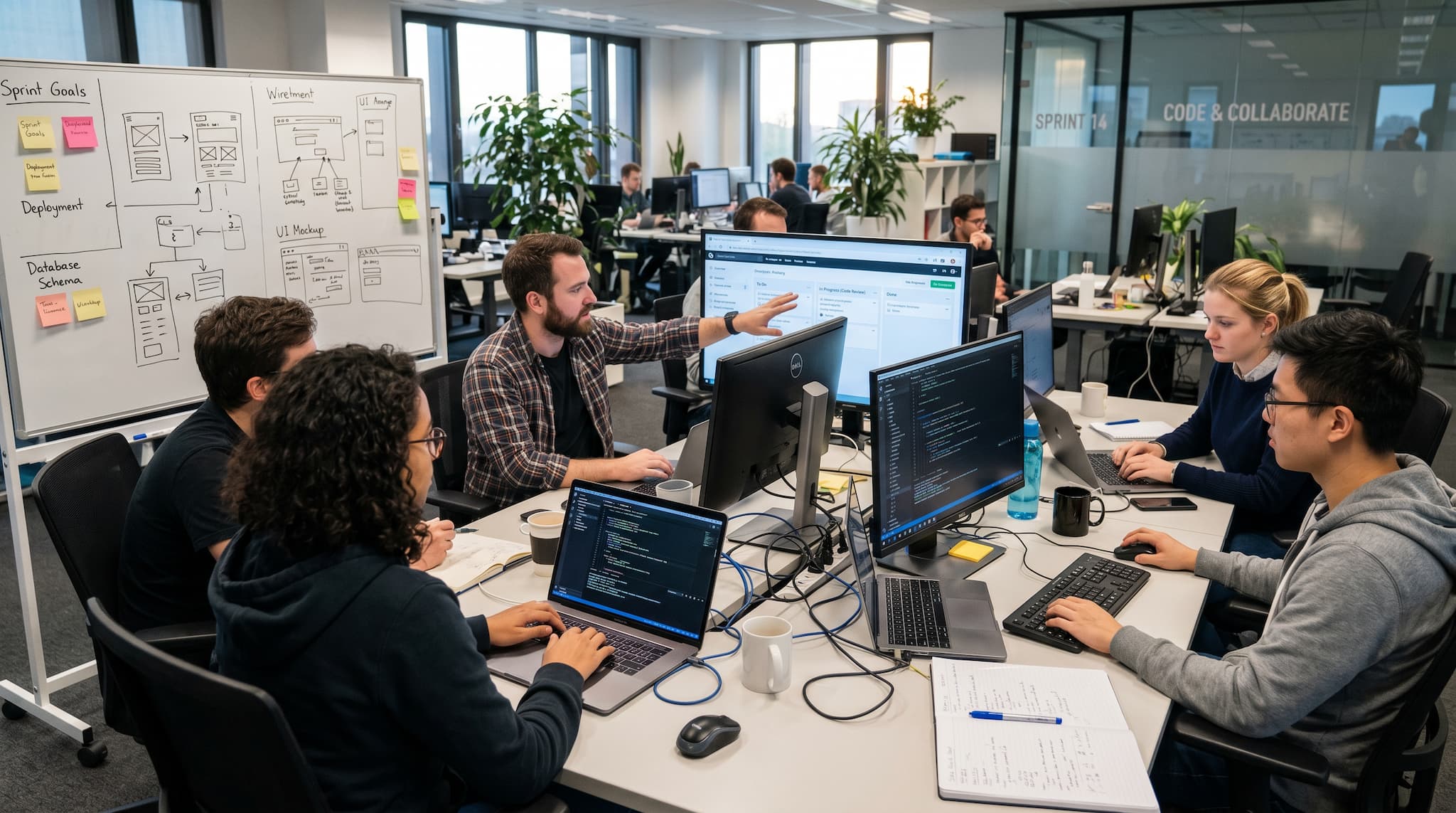
Startups typically operate with lean engineering teams where flexibility is essential. Developers often function as cross-disciplinary contributors, managing backend logic, frontend components, cloud deployment, and sometimes DevOps pipelines within the same sprint. Decision-making is fast. Bureaucracy is minimal. Documentation is lightweight.
The greatest risk in startup software development is not technical imperfection. It is irrelevance.
Enterprise Software Development: Building Under Responsibility
Enterprise software development operates under an entirely different pressure structure. Established organizations manage revenue-generating operations, sensitive data, regulatory obligations, and complex internal ecosystems.
Software at this level is not an experiment – it is infrastructure.
A failure in enterprise application development can disrupt thousands of users, interrupt revenue streams, trigger compliance violations, or damage brand reputation. Because of this, enterprise software development prioritizes predictability, risk mitigation, and long-term sustainability.
Enterprises approach development with questions such as:
- How will this system integrate with existing infrastructure?
- How do we ensure compliance with industry regulations?
- What security measures protect against breaches?
- How do we guarantee uptime and disaster recovery?
- Can this architecture support five to ten years of scale?
These questions introduce additional layers of governance and process. Enterprise projects often involve detailed documentation, stakeholder alignment, security audits, performance testing, and multi-environment deployment strategies.
Teams are structured differently as well. Instead of generalists handling multiple responsibilities, enterprise environments rely on specialization:
- Backend engineers
- Frontend engineers
- DevOps teams
- QA departments
- Security specialists
- Business analysts
- Project managers
Each role reduces blind spots and increases accountability. However, this specialization also increases coordination complexity and delivery timelines.
The greatest risk in enterprise software development is not irrelevance. It is disruption.
Market Risk vs Operational Risk: The Core Strategic Divide
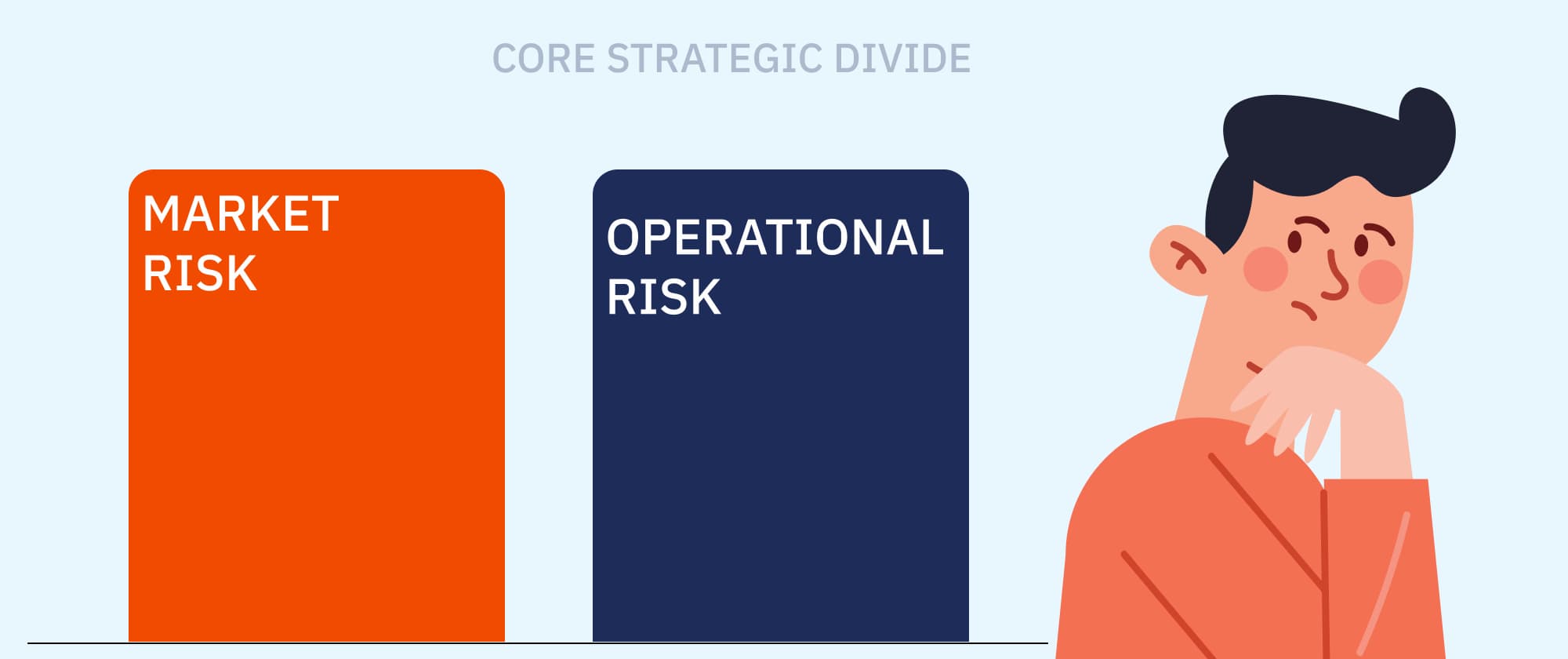
The most critical difference between startup software development and enterprise software development lies in the type of risk each must manage.
Startups primarily face market risk:
- Uncertain demand
- Competitive volatility
- Funding constraints
- Product-market misalignment
Enterprises primarily face operational risk:
- Data breaches
- Regulatory penalties
- System outages
- Revenue disruption
- Reputational damage
Because startups are uncertain about demand, they accept technical shortcuts in exchange for speed. Because enterprises are certain about demand, they invest heavily in reliability and compliance.
This divergence shapes architecture, hiring models, infrastructure investment, and pricing.
Development Approach: Agility vs Governance
Startup development typically emphasizes Agile methodology in its purest form. Short sprints, rapid iterations, and continuous deployment are common. Requirements evolve organically, and teams pivot quickly when market feedback demands change.
In contrast, enterprise software development often blends Agile practices with governance frameworks. While sprints may still be used, changes often require approval cycles, security validation, and alignment across multiple departments.
Enterprise environments commonly include:
- Formal requirement documentation
- Risk assessments
- Architecture review boards
- Compliance validation checkpoints
- Structured release management
This governance may slow initial velocity, but it significantly reduces downstream instability.
Pricing Structures: Why Enterprise Software Development Requires Larger Investment
The pricing gap between startup and enterprise software development is rooted in complexity and accountability.
Enterprise projects typically include components that startups may delay:
- Advanced security architecture
- Compliance implementation (HIPAA, SOC 2, GDPR, PCI-DSS)
- Penetration testing
- Load testing and performance optimization
- Infrastructure redundancy
- Disaster recovery systems
- Multi-region deployment strategies
- Legacy system integration
- Detailed documentation
Each layer adds cost – but also reduces exposure.
Startup software development often begins with lean infrastructure and limited compliance overhead. Teams are smaller, timelines are shorter, and the scope is tightly focused on core features.
However, the long-term cost of early shortcuts can be significant if systems must be rebuilt under pressure.
The most strategic companies invest in lean but scalable architecture – balancing speed with foresight.
Technology Stack and Architectural Philosophy
Startups typically select technologies that maximize speed and developer efficiency. Frameworks with large communities and rapid deployment capabilities are attractive because they reduce friction during experimentation.
Enterprise technology decisions, on the other hand, are influenced by factors such as:
- Long-term vendor support
- Integration compatibility
- Security certifications
- Internal IT policies
- Scalability benchmarks
The timeline perspective differs significantly:
- Startups plan for immediate traction.
- Enterprises plan for sustained reliability.
Architecture reflects these priorities.
The Transition Phase: From Startup to Enterprise Maturity
The most challenging period for many organizations is the transition from startup-style development to enterprise-grade systems.
As companies scale, user volume increases, regulatory exposure grows, and infrastructure complexity expands. Systems built for agility may strain under new demands. Informal processes begin to break. Technical debt accumulates.
Common challenges during this transition include:
- Performance bottlenecks
- Security vulnerabilities
- Inadequate documentation
- Overloaded engineering teams
- Scaling inefficiencies
Successfully navigating this stage requires strategic architectural upgrades, experienced engineering leadership, and scalable team structures.
Why Dedicated Engineering Teams Offer Strategic Advantage
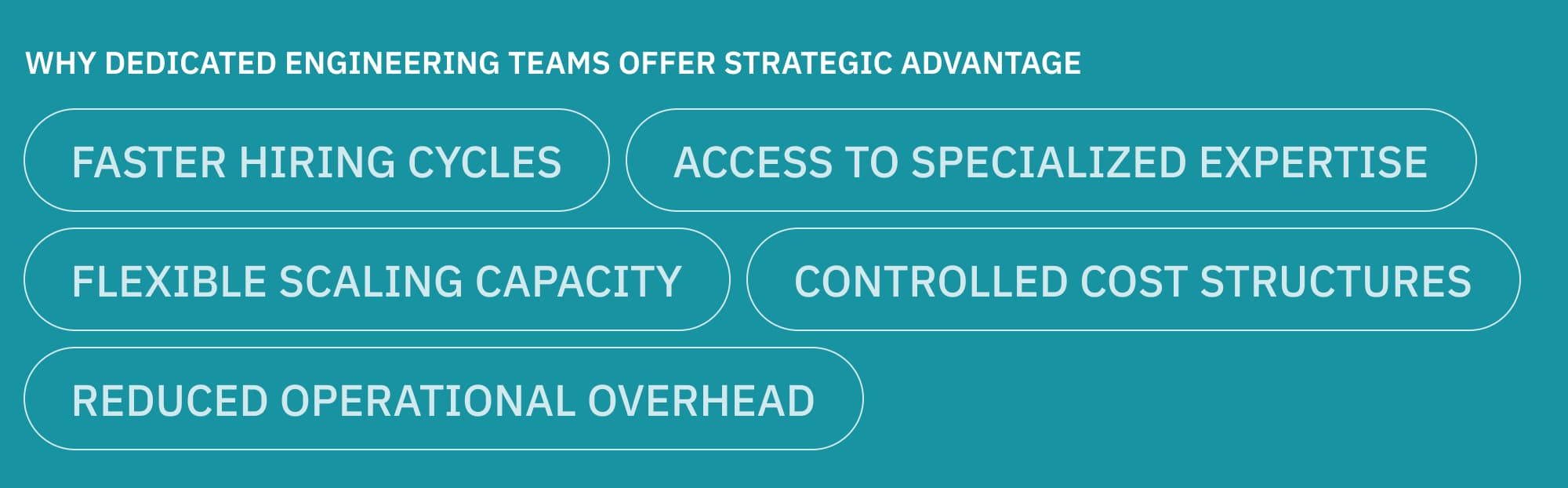
Both startup and enterprise environments benefit from flexible access to senior engineering talent. Dedicated engineering teams provide:
- Faster hiring cycles
- Access to specialized expertise
- Flexible scaling capacity
- Reduced operational overhead
- Controlled cost structures
For startups, this enables rapid MVP development and faster iteration. For enterprises, it allows targeted modernization initiatives without permanently expanding internal headcount. This flexibility reduces both market and operational risk.
Final Perspective: Aligning Software Strategy with Business Maturity
Startup vs enterprise software development is not about superiority. It is about alignment. Organizations must ask:
- Where are we in our growth lifecycle?
- What type of risk do we face?
- How stable must our systems be?
- How quickly must we move?
- What is our long-term architectural horizon?
When software strategy matches business maturity, growth accelerates. When it does not, friction compounds.
How Happen Technologies Supports Both Models
Happen Technologies builds dedicated engineering teams tailored to business stage and operational complexity.
For startups, we enable rapid product validation with scalable architecture foundations.
For enterprises, we provide secure, compliant, and high-performance engineering teams capable of handling complex systems and modernization initiatives.
Our teams across Eastern Europe and Latin America combine senior expertise with operational flexibility – allowing companies to scale intelligently without unnecessary risk.
Ready to Scale Your Team?
Happen Technologies builds high-performing remote engineering teams for US-based companies using talent from Eastern Europe and Latin America. Whether you need a single senior engineer or a fully cross-functional team, we help you scale quickly and strategically.